Explore our integrated range of high-performance architectural systems, precision-engineered to meet stringent international standards for commercial, industrial, and residential environments.
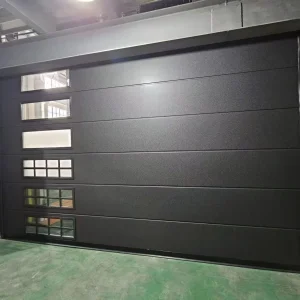
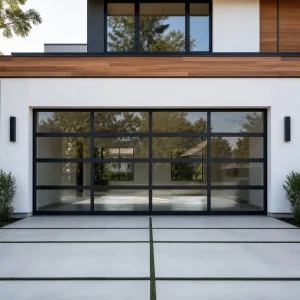
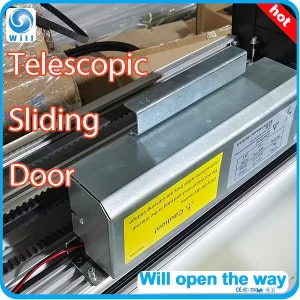
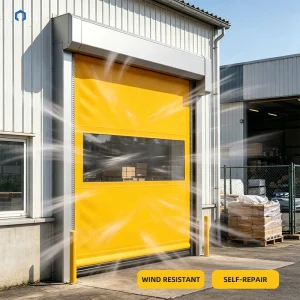
Analyzing the intersection of cleanroom kinematics, differential pressure physics, and material science in modern industrial environments.
In modern industrial and clinical ecosystems, maintaining atmospheric containment is not merely a matter of operational safety—it is a critical parameter of productivity, compliance, and biosecurity. Hermetically sealed doors function as the primary structural boundary in environments where positive or negative pressure gradients must be dynamically preserved. From high-grade pharmaceutical compounding facilities to semiconductor fabrication cleanrooms (ISO Class 3 and below) and Biosafety Level (BSL-3/BSL-4) laboratories, these advanced access systems prevent contamination, minimize particulate dispersion, and protect human life.
Historically, containment doors relied on standard compressive gaskets and manual heavy-latch mechanisms, which often suffered from accelerated wear, alignment migration, and high mechanical failure rates. Modern OEM/ODM hermetic sealed doors have evolved. Today, they integrate state-of-the-art dynamic drop-down systems, automated microprocessor-controlled brushless motor drives, and chemical-resistant, non-porous cladding materials. As a global exporter, we customize these systems to align with rigorous validation protocols, including EU GMP Annex 1, FDA regulations, and ISO 14644 standards.
The core differentiator of a true hermetic door lies in its kinematics. When closing, the door leaf does not merely slide or swing flush against the frame. Instead, a complex track mechanism guides the door downwards and inwards toward the frame in a continuous diagonal movement. This multi-axial descent compresses a highly durable elastomeric gasket against the perimeter jamb and the finished floor. The resultant seal minimizes air permeability to negligible levels, as quantified by EN 12207 Class 4 standards—the highest rating for airtightness.
Engineered to withstand severe differential pressures (ranging from 15 Pa up to 80 Pa), preventing air cross-contamination between controlled and uncontrolled zones.
Smooth, flush surfaces optimized for intensive wash-down protocols using hydrogen peroxide (VHP), sodium hypochlorite, and other aggressive sterilizing agents.
Integrated controller units featuring self-diagnostic logic, variable speed profiles, and failsafe modes that sync with building management systems (BMS).
Analyzing structural composition, gasket composition, and operational intelligence.
Every industrial project demands tailored physical dimensions and customized protective traits. Our OEM/ODM service framework provides structural flexibility through precise engineering parameters:
Understanding regional requirements, supply chains, and vertical integration needs for global markets.
The global demand for high-integrity hermetic doors is driven by massive expansions in biotechnology, personalized medicine, aerospace component assembly, and microelectronics manufacturing. In regions like North America and the European Union, strict adherence to GMP Annex 1 revisions has forced companies to upgrade their facility envelopes, focusing specifically on door-operation velocities and airlock leakage rates.
As a leading supplier and exporter, we address these localized demands with tailored packaging, ocean-freight stabilization configurations, and customizable control units designed to handle varied global electrical specifications (e.g., 110V/60Hz, 220V/50Hz). Enterprise buyers look for key differentiators during procurement:
Enterprise procurement teams look for a Mean Time Between Failures (MTBF) exceeding 1.5 million cycles, ensuring low maintenance overheads.
The capability to plug into major BMS platforms using Modbus, BACnet, or Dry Contact relays to coordinate airlock sequences.
Full mill test reports, grade certificates, and chemical compatibility ratings for sanitization agents, forming a critical part of the validation package.
Standard integration of safety light-curtains, physical obstruction sensors, and emergency manual override releases.
A technical comparison highlighting the performance differentials across architectural barrier models.
| Door Model / System type | Air Leakage Rating (EN 12207) | Primary Application Areas | Standard Core Options | Automation Options | Certifications |
|---|---|---|---|---|---|
| Ultra-Clean Hermetic Sliding Door | Class 4 (≤0.05 m³/h·m²) | Pharma cleanrooms, operating theaters, biosafety labs (BSL-3) | 304/316L SS, PU Core, HPL, Lead-lining | Brushless DC, Microprocessor, Safety Curtains | CE, GMP, ISO 14644, EN 16005 |
| Semi-Hermetic Cleanroom Swing Door | Class 2 (≤1.5 m³/h·m²) | Pharma corridors, electronics packaging, labs | Powder-coated steel, Honeycomb/PU core | Electro-mechanical swing operators | CE, ISO 14644 |
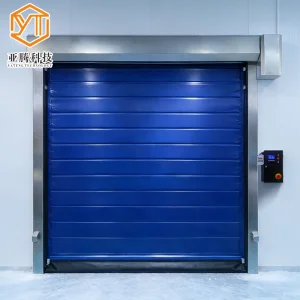
| High-Speed Cleanroom Zipper Roll-Up Door | Class 1 (≤3.0 m³/h·m²) | High-traffic logistics, secondary airlocks | Flexible PVC fabric, dynamic zip tracks | High-speed frequency inverter motor | CE, EN 13241-1 |
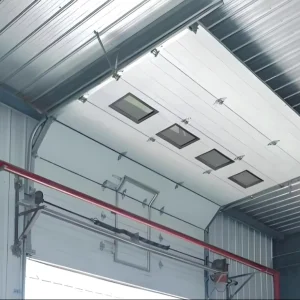
| Insulated Industrial Sectional Door | Non-hermetic (Low infiltration) | External loading docks, warehouses, logistics centers | Double-skin steel, 40-50mm PU core | Heavy-duty industrial chain drives, PLC | CE, EN 13241 |
The convergence of physical infrastructure and digital intelligence to optimize containment integrity.
The next generation of hermetic sealed doors will transcend physical boundaries, integrating directly into industrial networks. Below is the technical roadmap directing our engineering development over the next five years:
While stainless steel remains the gold standard for hygiene, micro-scratches from continuous scrubbing can house bacterial colonies. We are piloting permanent, non-leaching antimicrobial coatings utilizing titanium dioxide (TiO₂) and silver-ion technologies. When activated by light, these coatings catalyze the destruction of bacteria, viruses, and fungi on the door surface without degrading under high-concentration VHP cycles.
By integrating micro-sensors directly within the motor housing, pulley system, and compression tracks, we collect vibration, thermal, and current-draw profiles in real time. These edge-computing sensors use ML models to predict seal wear or mechanical misalignment before a compromise in airlock pressure occurs, avoiding costly facility shutdowns.
In cooperation with cleanroom HVAC designers, future hermetic systems will feature synchronized air-curtains and purging nozzles built directly into the frame. As the door begins to slide, a high-velocity HEPA-filtered air curtain will fire down, creating an active aerodynamic barrier to complement the static physical barrier, reducing recovery times for cleanroom pressure stabilization.
Global leaders in high-performance access architecture, blending manufacturing scale with cleanroom-grade precision.
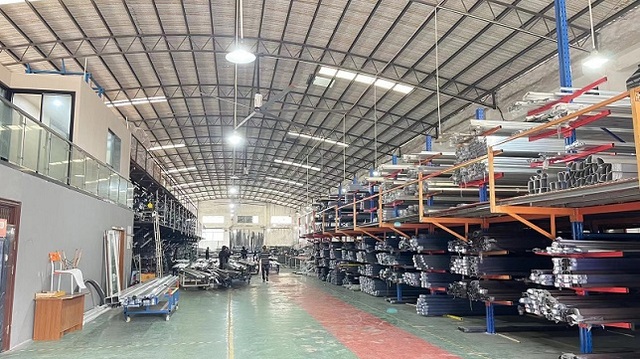
Dongguan Gerald Doors Co., Ltd. is a leading China garage door manufacturer specializing in residential, commercial, and industrial door solutions for customers worldwide. With a strong focus on quality, innovation, and reliability, Gerald Doors provides a comprehensive range of entrance and access systems designed to meet the needs of modern buildings, warehouses, logistics centers, factories, and residential properties.
Our product portfolio includes residential garage doors, commercial garage doors, industrial overhead doors, sectional doors, roller shutter doors, high-speed doors, fire-rated doors, security doors, and customized access solutions. Engineered with premium materials and advanced manufacturing technologies, our products are designed to deliver superior durability, safety, energy efficiency, and long-term performance in diverse operating environments.
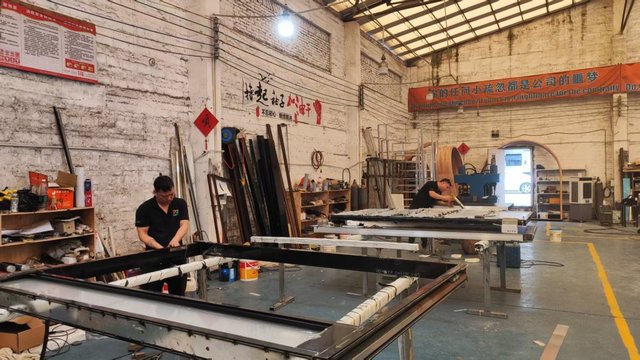
At Gerald Doors, we understand that every project has unique requirements. Our experienced engineering and production teams work closely with customers to develop tailored solutions that match specific dimensions, operational needs, architectural styles, and performance standards. From design and manufacturing to quality control and delivery, we maintain strict production processes to ensure consistent product excellence.
Serving clients across North America, Europe, the Middle East, Southeast Asia, and other global markets, Gerald Doors has built a reputation for dependable products, responsive customer service, and competitive manufacturing capabilities. We continuously invest in research and development to improve product functionality, automation technologies, and smart access solutions that support the evolving demands of residential and industrial applications.
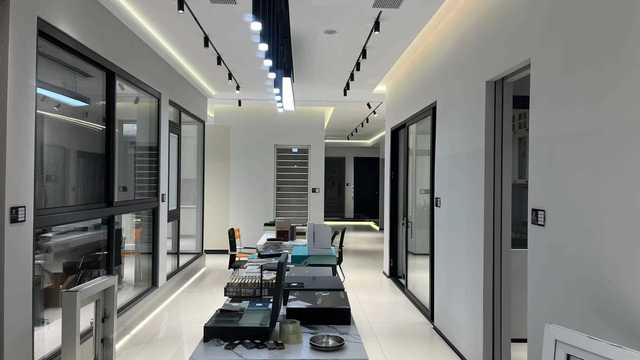
Driven by a commitment to quality and customer satisfaction, Dongguan Gerald Doors Co., Ltd. strives to be a trusted global partner for innovative, secure, and high-performance door systems. Our expansion into high-precision OEM/ODM hermetically sealed door units leverages decades of structural experience, dynamic automation research, and strict quality verification parameters to serve clinical and advanced manufacturing facilities around the globe.
Addressing the core integration, performance, and validation questions of industrial architects and validation engineers.
A true hermetic door does not simply rest flat against the frame. It features a unique mechanical mechanism that drops down and presses inward against the frame in a diagonal closing track, compressing the specialized perimeter gasket on all four sides. This ensures that air leakage matches EN 12207 Class 4 standards, maintaining the pressure differential inside cleanroom facilities.
Yes. Our OEM/ODM options include standard 304 or marine-grade 316L stainless steel, as well as specialized high-pressure laminates (HPL). Both configurations resist vaporized hydrogen peroxide (VHP), chlorine dioxide, and alcohols without surface staining or degradation.
We insert a continuous lead sheet (thickness: 1mm to 4mm) between the polyurethane foam core and the stainless steel cladding. The frame is also lead-lined, ensuring that no radiation leaks around the joints while maintaining a complete hermetic seal.
Every automated unit is equipped with a high-sensitivity safety light curtain and safety sensors to detect obstructions. In the event of a power loss, the door can be opened manually using integrated recessed handles or emergency backup batteries.
Yes. Our controllers support digital input/output interfaces, Modbus, and dry contact relays. This allows synchronization with HVAC systems, fire alarms, and complex airlock interlock matrices.
Under normal operating conditions and cleanroom-grade cleaning, the silicone or EPDM gaskets are rated for over 500,000 compression cycles. Gaskets are designed for quick and easy replacement without tools or door disassembly.
All cleanroom doors are wiped down, vacuum-packed in anti-static protective film, and crated in fumigated wooden boxes. This preserves the surface integrity and prevents moisture ingress during transit.
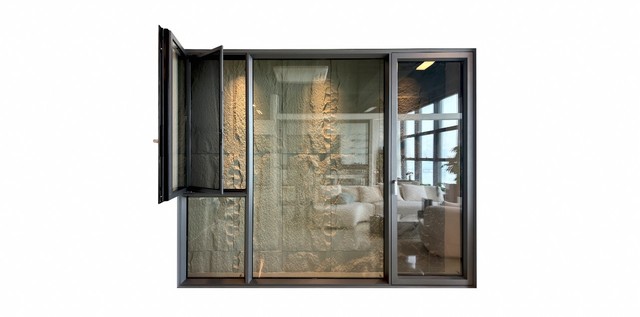
Yes. We offer double-glazed flush-fit windows with integrated silica-gel desiccants to prevent internal condensation. We can customize the size, shape (round, rectangular), and type of glass (tempered, fire-rated, lead-shielded).
Yes. Our engineering team designs custom structural openings to meet your specific construction dimensions. We provide CAD drafts and 3D mockups before manufacturing to ensure perfect integration.
Every shipment is accompanied by CE conformity certificates, material mill sheets, acoustic transmission test results, and airtightness performance data sheets.
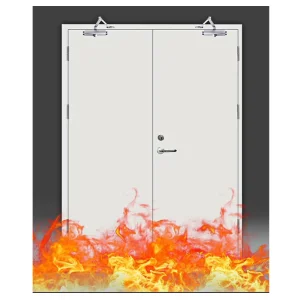
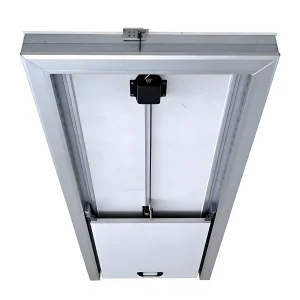
Complete your facility envelope with our robust selection of fire-rated, thermal-insulated, and high-speed automated barriers, engineered for continuous operation.
 Gerald Doors