Explore our industrial-grade automatic controllers, magnetic drive systems, and high-performance sliding configurations engineering to global safety standards.
Market requirements are changing rapidly toward integrated, intelligent building access systems.
Modern commercial infrastructure demands low energy loss, high reliability, and touchless entry. Automatic doors have evolved from luxury installations to mandatory building compliance interfaces designed to balance HVAC loads while supporting high building occupant throughput.
Global standardizations such as EN 16005 (European Standard for power operated pedestrian doorsets safety in use) and ANSI/BHMA A156.10 govern sensor fields, kinetic energy constraints, and safety logic. Manufacturers must engineer systems passing stringent cycle tests.
Contemporary automatic entryways connect to Building Management Systems (BMS), utilizing real-time diagnostic reporting, access control logging, and remote status parameters. Security-driven interlocking ensures physical network perimeters remain secure against threats.
Understanding mechanical and electronic shifts that drive next-generation building access.
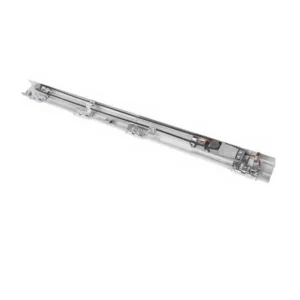
The development of magnetic levitation door operators, such as the DZ-150 Maglev Sliding Door System, marks a structural leap from traditional belt-and-gear configurations. Maglev doors operate through linear motor dynamics. By removing physical mechanical wear points (belts, pulleys, gearboxes):
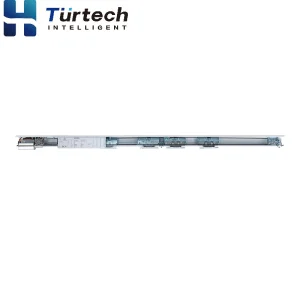
For high-frequency commercial entries, the reliance on brushed motors is fading. Power systems like the Turtech 6s with Brushless Motors offer structural advantages:
Modern entrance systems use active infrared (AIR) combined with radar motion detection to construct dynamic safety fields. The door controller recalculates deceleration curves in real-time, preventing contact with elderly, disabled, or stationary occupants. In power failure scenarios, emergency back-up batteries or mechanical spring releases activate to clear egress corridors safely.
| Operator Drive Type | Primary Mechanical Component | Common Application | Maintenance Lifecycle | Energy Performance |
|---|---|---|---|---|
| Magnetic Levitation | Linear Permanent Magnet Motor | Offices, Luxury Residences, Cleanrooms | Ultra-Low (No wear parts) | High Efficiency (Demand-responsive) |
| Brushless DC (BLDC) | Electric Stator w/ Electronic Control | Heavy Transit, Retail Outlets, Hospitals | Low (Scheduled track cleanings) | Excellent (Optimal power-to-load) |
| Brushed DC / AC Gear | Carbon Brushes, Gear Reduction Box | Standard Residential Garage Openers | Medium (Requires brush replacement) | Moderate (Friction losses in gears) |
How automation and vertical integration lower manufacturing lead times while maintaining strict quality tolerances.
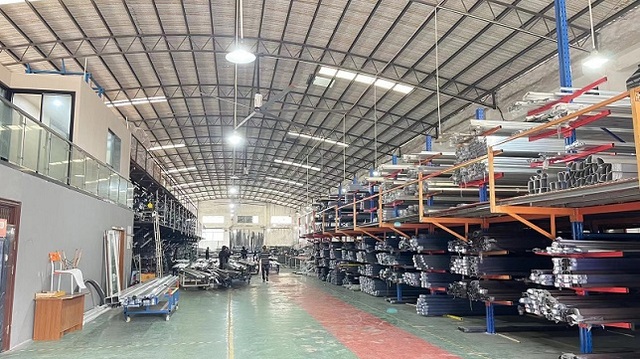
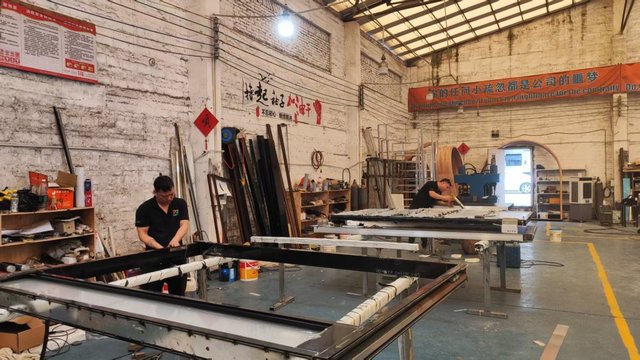
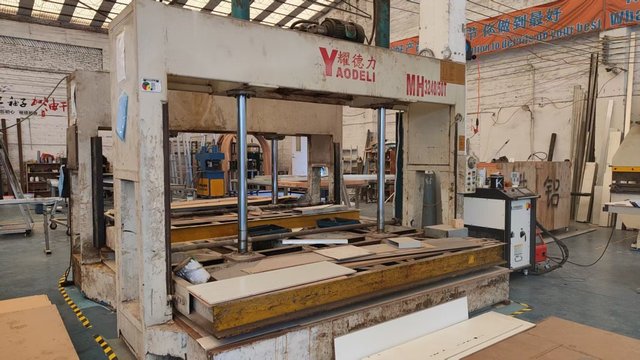
In modern automatic door fabrication, the convergence of material science and automated manufacturing lines allows manufacturers to control tolerances down to micrometers. Industry 4.0 integration addresses standard supply chain vulnerabilities through automation in material mixing, extrusion, assembly, and testing.
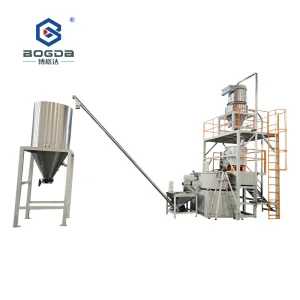
Using PVC/WPC automatic mixing and conveying systems, raw polymers, stabilizers, and modifiers are measured via high-precision pneumatic weight feeders. This limits manual errors, ensuring door frame profiles have high structural strength, flame resistance, and weatherproofing.
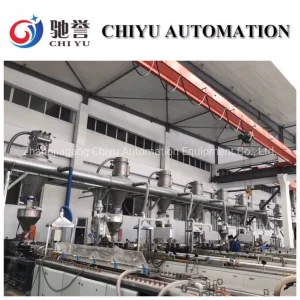
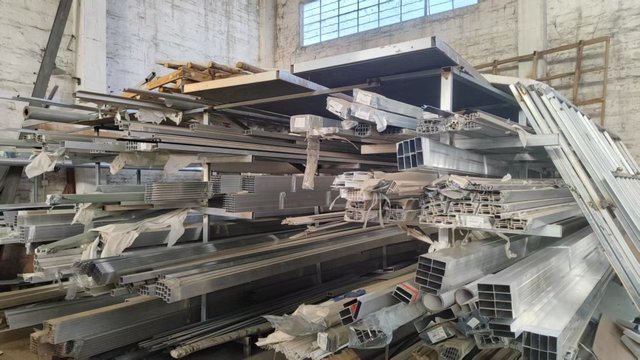
Automated vacuum feeders supply extruded profiles to precise molding matrices. Consistent wall thickness, reinforced internal chambers, and uniform thermal breaks are generated in one production sequence, minimizing raw material waste.
Every digital control system undergoes testing in simulated environmental chambers. Operators are run under continuous load cycles, testing power surge limits, sensor reaction times, and structural fatigue resistance before final packaging.
This automated supply chain design provides international purchasers with predictable lead times, reduced shipping-prep delays, and compliance-ready products. Dongguan Gerald Doors Co., Ltd. demonstrates how these manufacturing principles scale, supporting custom door configurations for commercial projects, distribution terminals, and cold-storage operations globally.
Tailored access designs engineered for specific architectural, industrial, and high-frequency environments.
Hospitals rely on specialized automatic swing door operators and hermetically sealed sliding mechanisms. In operating rooms and laboratories, these systems prevent cross-contamination by creating airtight seals. They integrate with touchless hand sensors, kick-plates, and security badges to ensure efficient, clean-contact access.
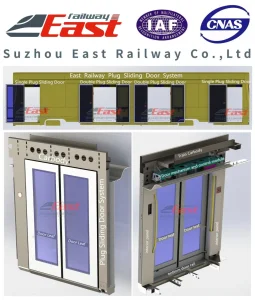
Heavy-duty railway double-leaf sliding door systems are designed for public transportation hubs. Engineered to handle continuous usage cycles, high-frequency passenger flow, and high mechanical vibrations, these systems feature reinforced guide tracks, brushless motors, and emergency manual release overrides.
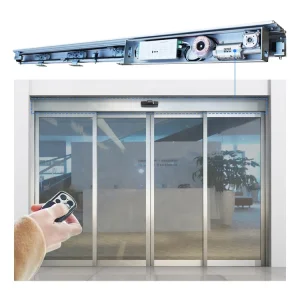
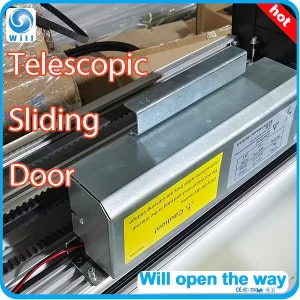
For hotels and high-end commercial spaces, the entry system contributes to the initial user experience. Remote control sliding systems (e.g., 125B configurations) balance aesthetic integration, fast operation, and silent functionality, managing thermal efficiency in main lobbies without disrupting visitors.
Key indicators and standards when qualifying an automatic door manufacturing partner.
Procurement departments and project engineers must evaluate several factors beyond base costs to ensure long-term system performance and safety:
Ensure motor assemblies and controllers match your application's expected traffic density. Residential applications generally require 20-50 cycles per day, whereas retail entrances or public transit points require heavy-duty brushless motors capable of 1,000+ continuous daily cycles.
The control board must easily interface with external components: fire alarms (for auto-open during emergencies), access systems (RFID cards, facial recognition), and safety sensors. Verify the controller supports standardized communication protocols like CAN-bus or dry contacts.
Ensure manufacturers provide verifiable certifications. Standard compliance lists include CE marking for European markets, UL 325 / ANSI 156.10 for North American layouts, and EN 16005 for pedestrian safety compliance.
A resilient OEM supplier should offer custom extruded profiles, specialized glass mounting tracks, custom paint/anodized finishes, and customized software options to match specific architectural designs.
Heavy-duty industrial access, maglev residential configurations, and specialized automation hardware.

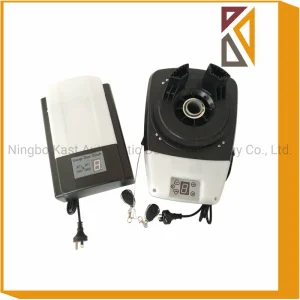
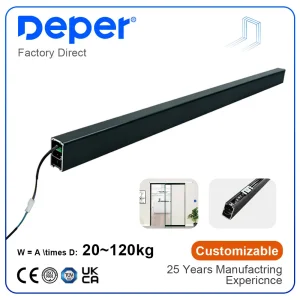
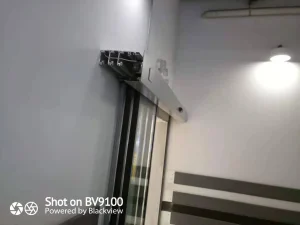
A trusted global manufacturer of premium entrance, access, and industrial door solutions.
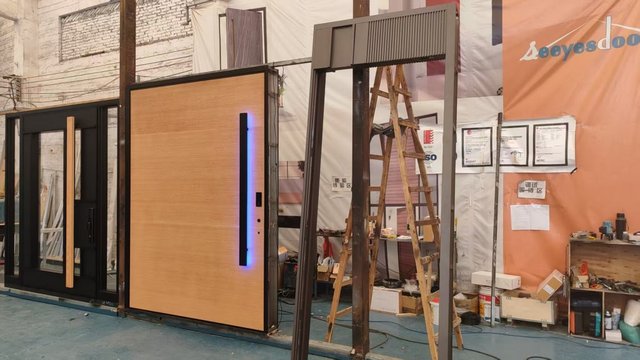
Dongguan Gerald Doors Co., Ltd. is a leading China garage door manufacturer specializing in residential, commercial, and industrial door solutions for customers worldwide. With a strong focus on quality, innovation, and reliability, Gerald Doors provides a comprehensive range of entrance and access systems designed to meet the needs of modern buildings, warehouses, logistics centers, factories, and residential properties.
Our product portfolio includes residential garage doors, commercial garage doors, industrial overhead doors, sectional doors, roller shutter doors, high-speed doors, fire-rated doors, security doors, and customized access solutions. Engineered with premium materials and advanced manufacturing technologies, our products are designed to deliver superior durability, safety, energy efficiency, and long-term performance in diverse operating environments.
At Gerald Doors, we understand that every project has unique requirements. Our experienced engineering and production teams work closely with customers to develop tailored solutions that match specific dimensions, operational needs, architectural styles, and performance standards. From design and manufacturing to quality control and delivery, we maintain strict production processes to ensure consistent product excellence.
Serving clients across North America, Europe, the Middle East, Southeast Asia, and other global markets, Gerald Doors has built a reputation for dependable products, responsive customer service, and competitive manufacturing capabilities. We continuously invest in research and development to improve product functionality, automation technologies, and smart access solutions that support the evolving demands of residential and industrial applications.
Driven by a commitment to quality and customer satisfaction, Dongguan Gerald Doors Co., Ltd. strives to be a trusted global partner for innovative, secure, and high-performance door systems.
Insights into selection, installation, standards, and troubleshooting of modern access systems.
BLDC motors do not use mechanical brushes, eliminating mechanical wear and dust. They offer higher torque efficiency, generate less heat under high-frequency operation, and support 100% continuous duty cycles. This makes them ideal for high-traffic environments, as seen in the Turtech 6s operator system, and reduces long-term maintenance costs compared to older AC systems.
Unlike belt-driven operators, Maglev systems like the DZ-150 utilize a linear motor design. Permanent magnets float the door carriage along a magnetic track. The control system modulates the magnetic fields to drive the door panel smoothly. This results in frictionless, nearly silent motion and highly responsive resistance detection for improved safety.
In Europe and many global markets, EN 16005 compliance is the benchmark. It specifies design requirements, testing procedures, and safety measures for power-operated pedestrian doors. Important safety parameters include sensor coverage limits, maximum kinetic impact energy, emergency breakout configurations, and regular maintenance logging requirements.
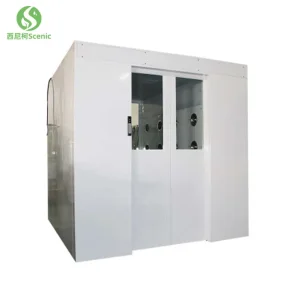
An interlocking system, such as our High-Tech Air Lock Interlock, connects two or more doors electronically. The control unit prevents opening one door unless all other connected doors in the chamber are closed and sealed. This prevents cross-contamination, stabilizes cleanroom air pressure, and maintains environmental separation.
Dunker Motors (e.g., the DSL-16) are German-engineered brushed or brushless DC motors known for their durable gear boxes, quiet operation, and reliability. They are integrated into premium sliding door operators to ensure stable, low-noise performance under heavy commercial loads over extended operational lifespans.
Yes. Industrial sectional and overhead garage door operators are built with high-torque gear motors and reinforced safety features like cable-break safety devices and spring-break protection. These systems can safely automate heavy insulated panels, high-speed roll-up doors, and warehouse loading docks while maintaining thermal control and building security.
 Gerald Doors